Scientific illustration for metastatic
breast cancer Care
illustration – mediation – information design
Scientific Illustration
for Metastatic Breast
Cancer Care
Date
– 2023
Client
– AstraZeneca
with the collaboration of Dr Uwer
Role
– illustration
– information design
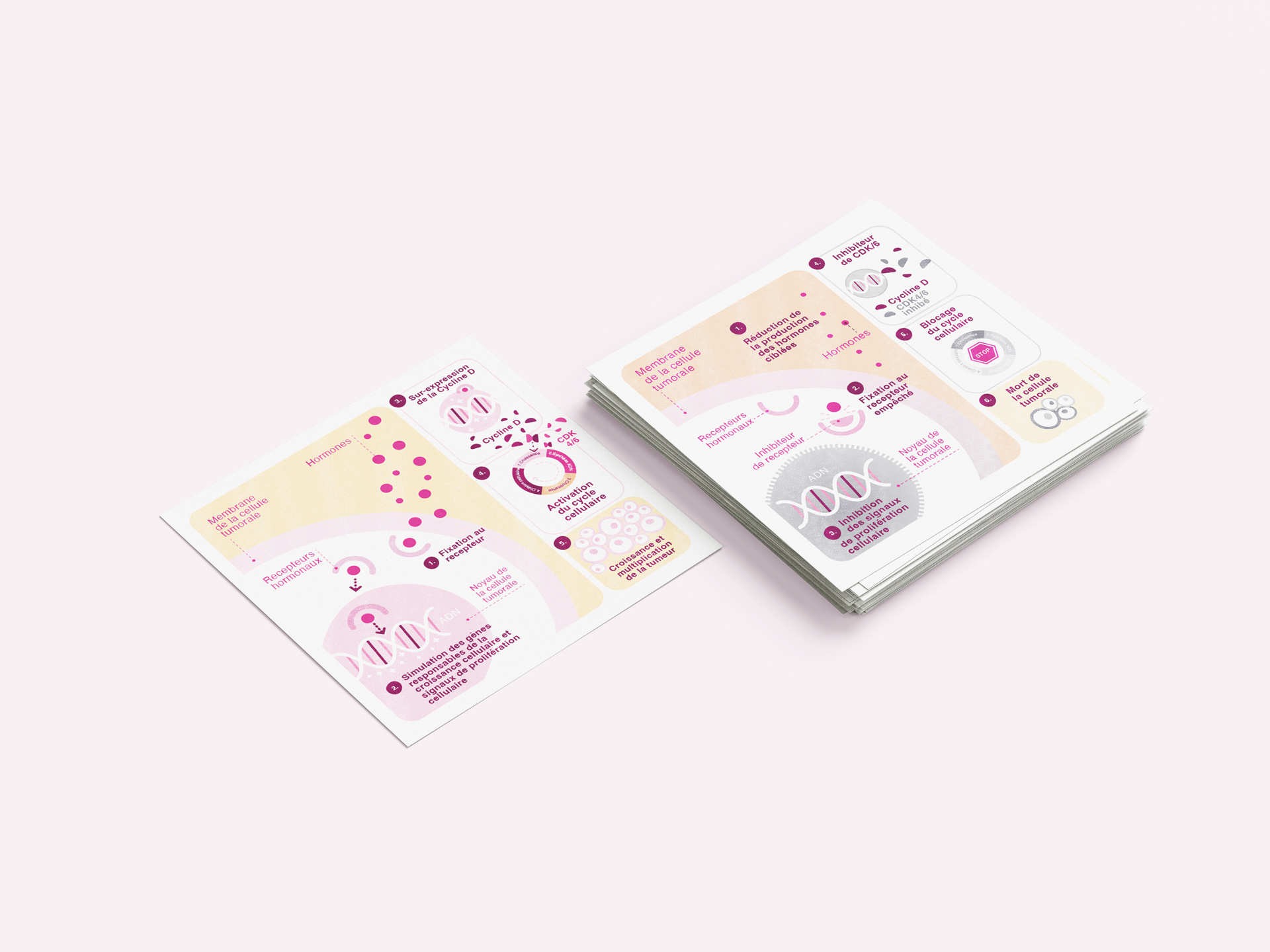
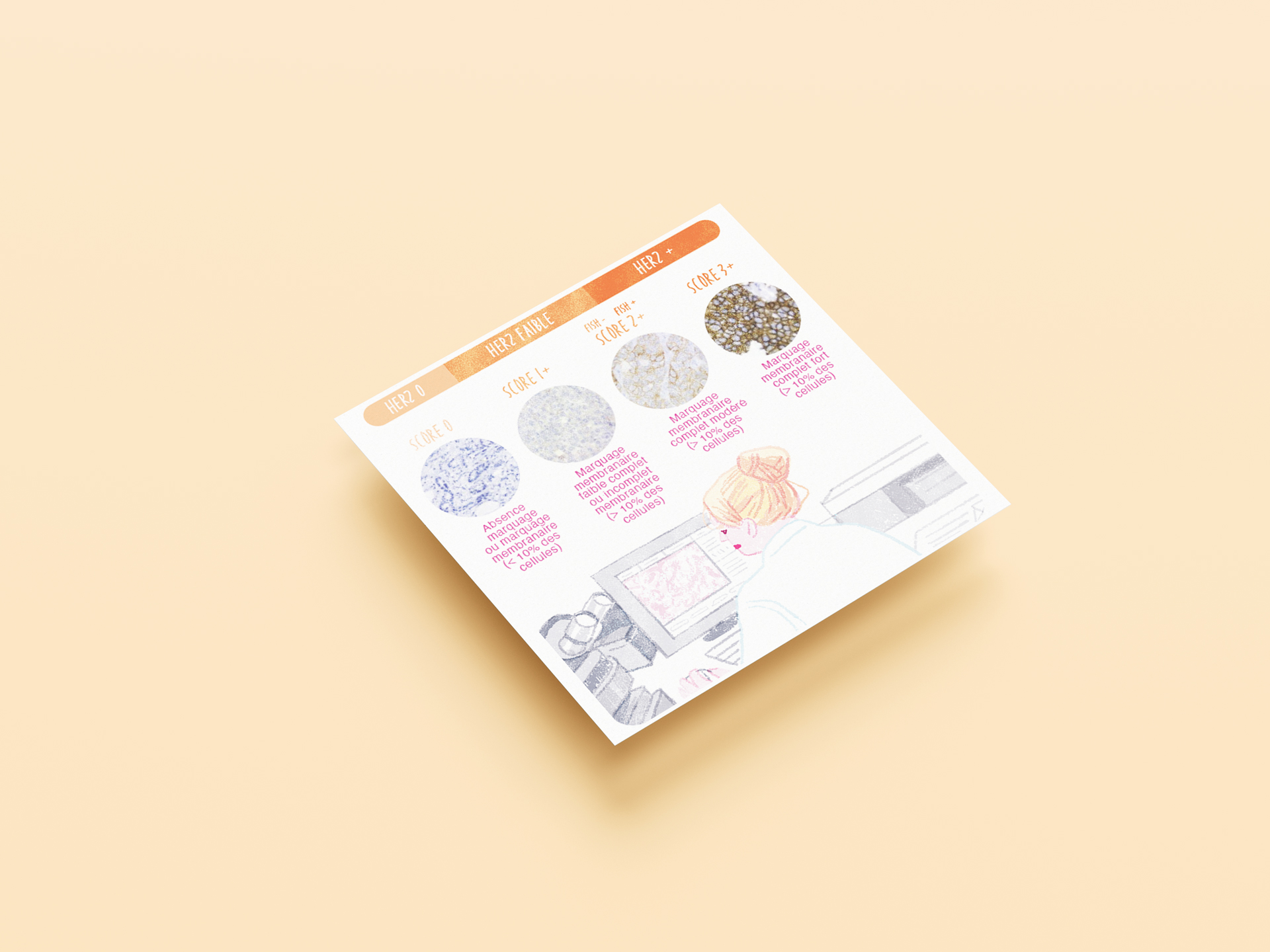
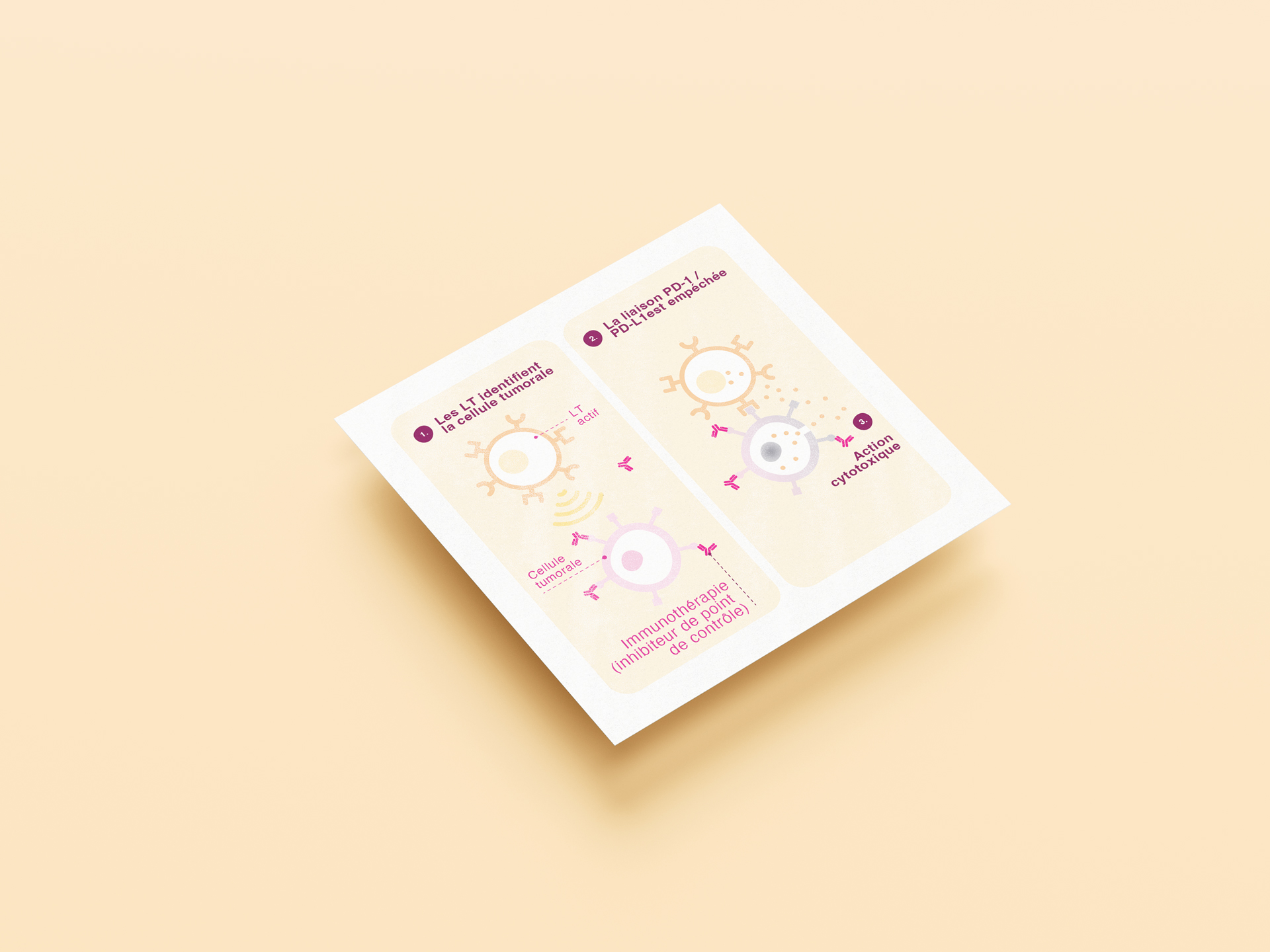
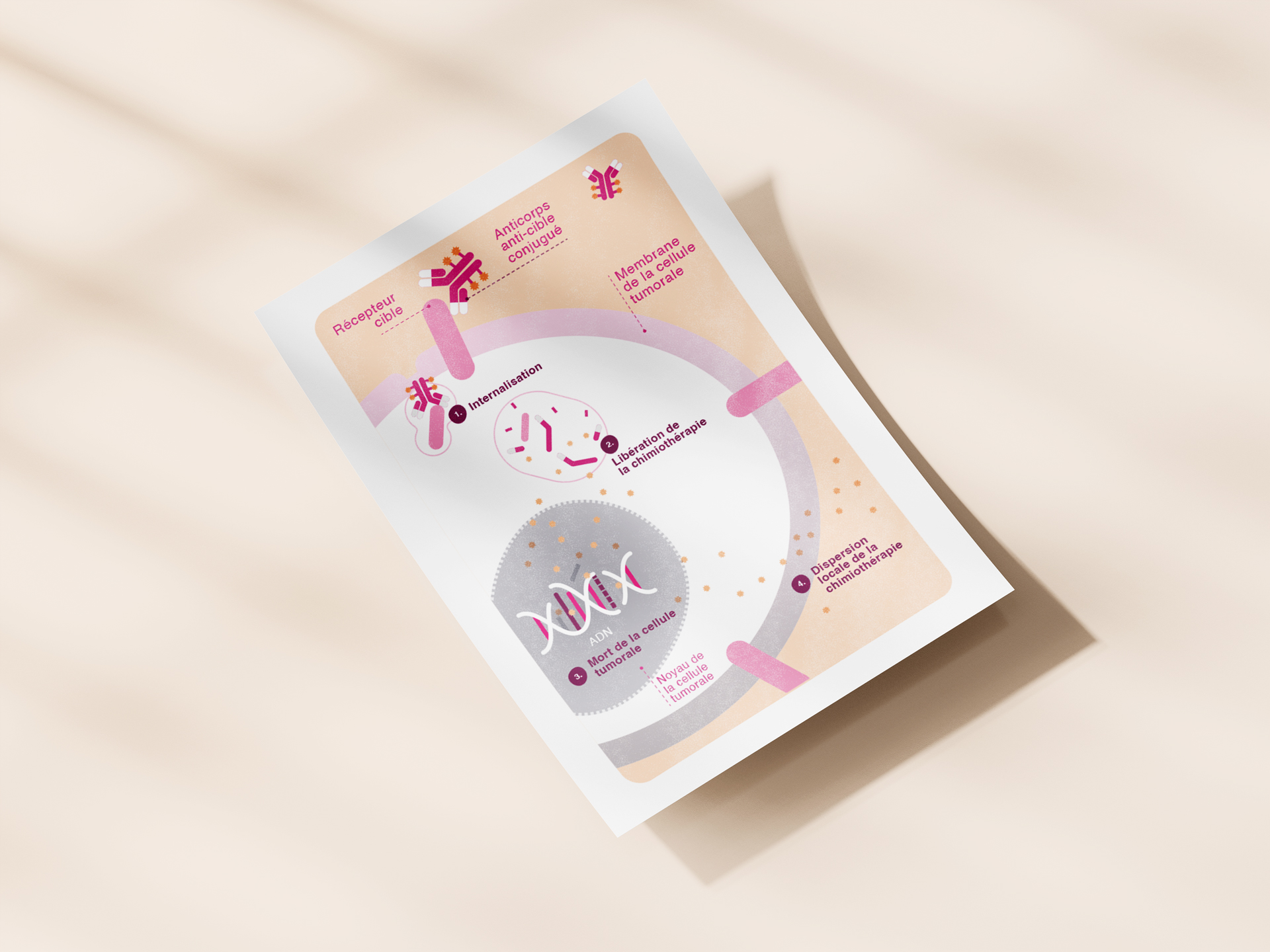
In 2023, I developed a series of scientific illustrations to accompany a patient brochure dedicated to metastatic breast cancer.
The objective was to help informed and expert patients better understand how their treatments work, by translating complex medical data into clear, accessible visual explanations.
Metastatic breast cancer occurs when cancer cells from the primary tumor spread to other parts of the body, forming secondary tumors (metastases). It is not a new cancer, but the progression of the original disease. Today, multiple treatment options exist, including chemotherapy, targeted therapies, hormone therapy, and immunotherapy, allowing for highly personalized care based on the biological characteristics of each tumor.
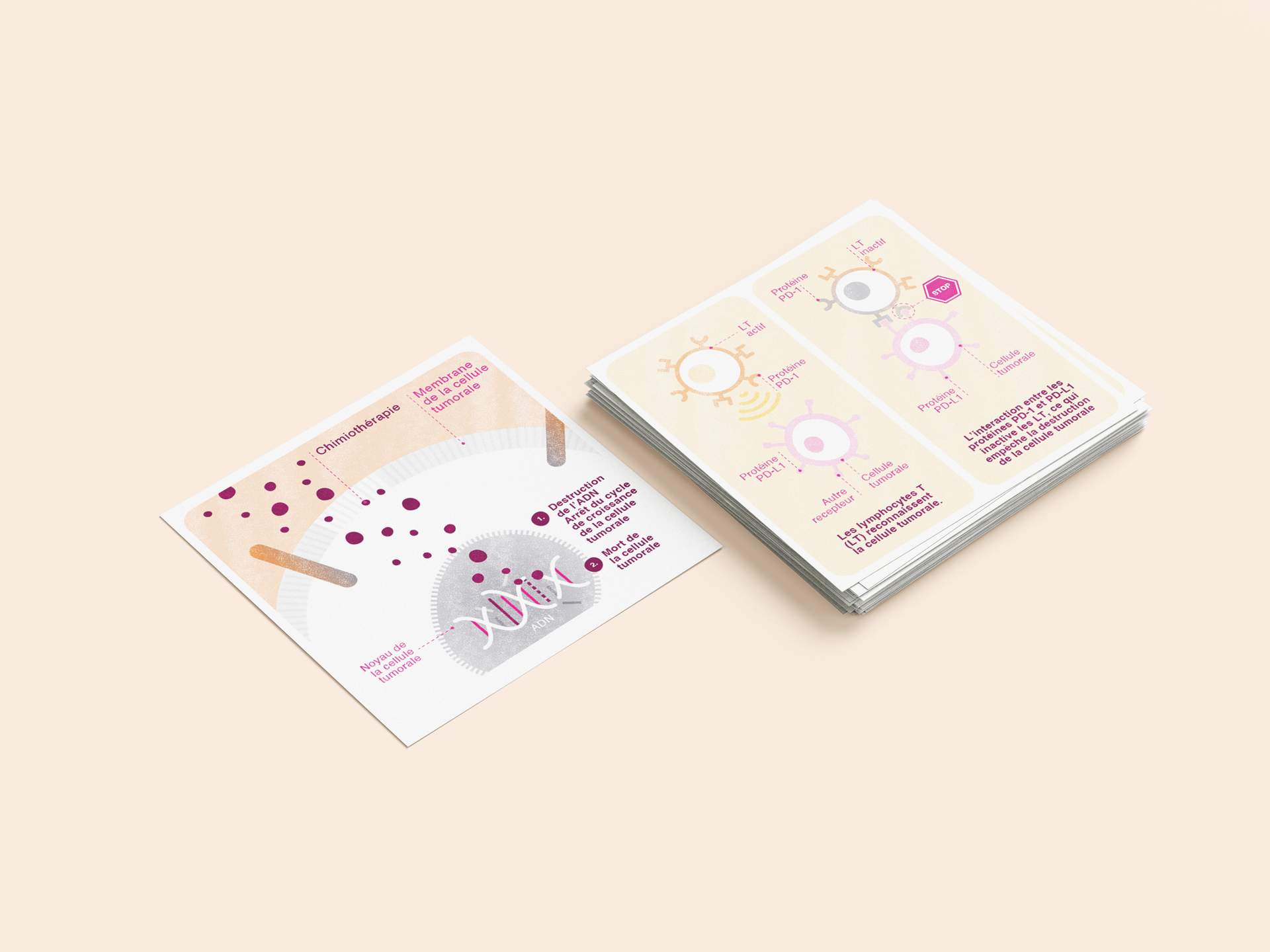
Working closely with a medical copywriter, I transformed dense scientific content into accurate, reassuring, and pedagogical visuals. We relied on simplified diagrams inspired by peer-reviewed scientific publications, ensuring medical precision while adapting them for a patient-facing audience.
The project was carried out in close collaboration with Dr. Uwer, with whom we conducted multiple review cycles to ensure the scientific accuracy, rigor, and validity of every visual element. These iterative exchanges were essential in maintaining the highest standards of medical reliability while preserving clarity and accessibility.
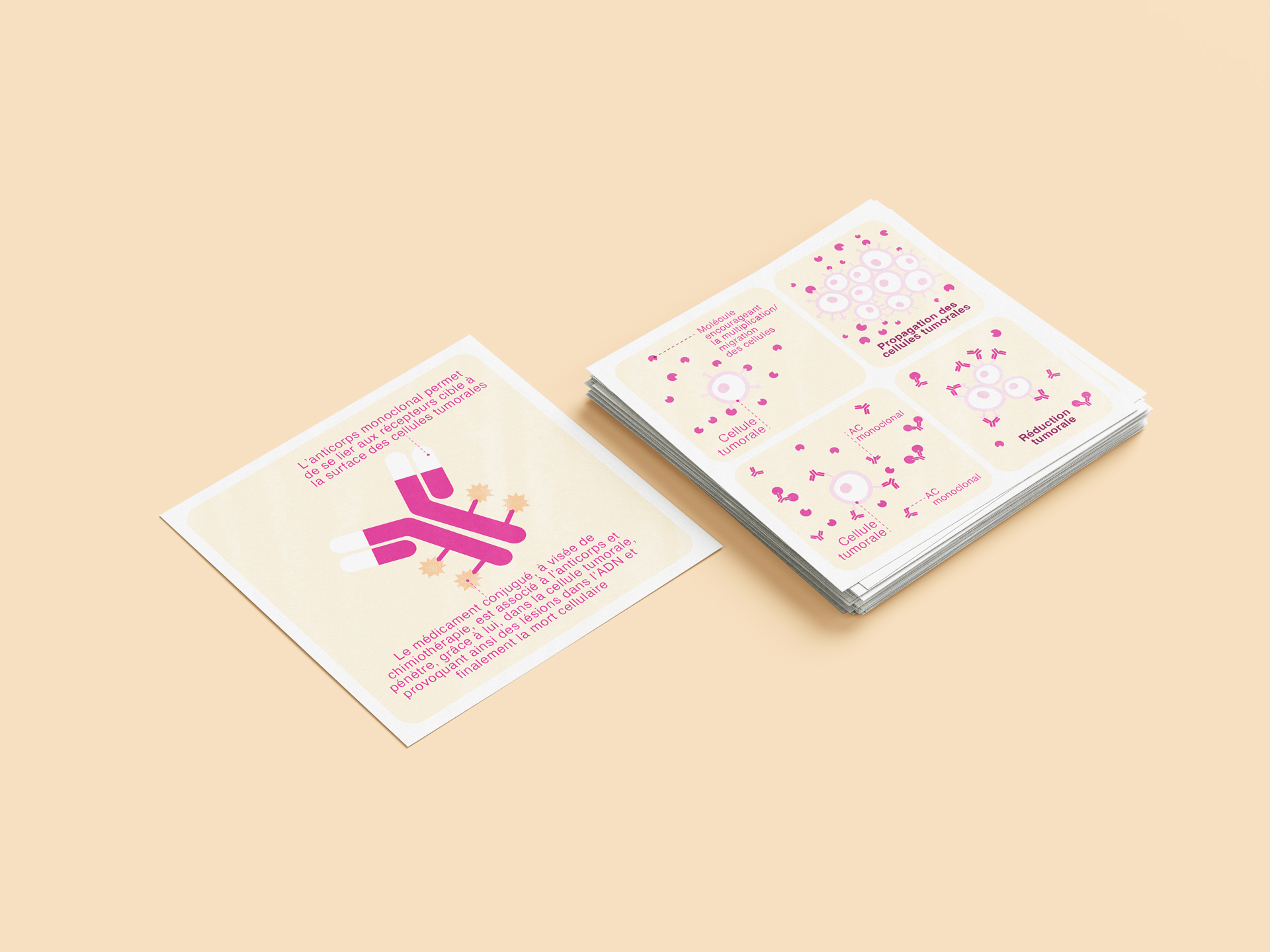
The challenge was to inform without alarming, to make advanced scientific concepts understandable while preserving their rigor. The goal was to empower patients with knowledge, enabling them to engage in meaningful, informed conversations with their healthcare providers.
This brochure complements the “Questions de femmes” collection, which addresses other aspects of breast cancer care, including HER2-positive cancers and support in daily life.
By combining medical accuracy, interdisciplinary collaboration, empathy, and visual clarity, this project demonstrates how scientific illustration can bridge the gap between complex research and patient understanding.